

If you have ever looked into investing online, you have probably come across the term “investment platform.”
It sounds more complicated than it really is.
In simple terms, an investment platform is a website or app that gives you a way to invest money and manage your investments online. Depending on the service, you might use it to buy stocks and ETFs, invest in cryptocurrency, access managed portfolios, or explore other types of investments.
The important thing to remember is that not every investment platform works in the same way. Some are established and regulated financial services. Others operate in much more specialised areas.
That is why it is worth doing some basic research before putting money into any platform.
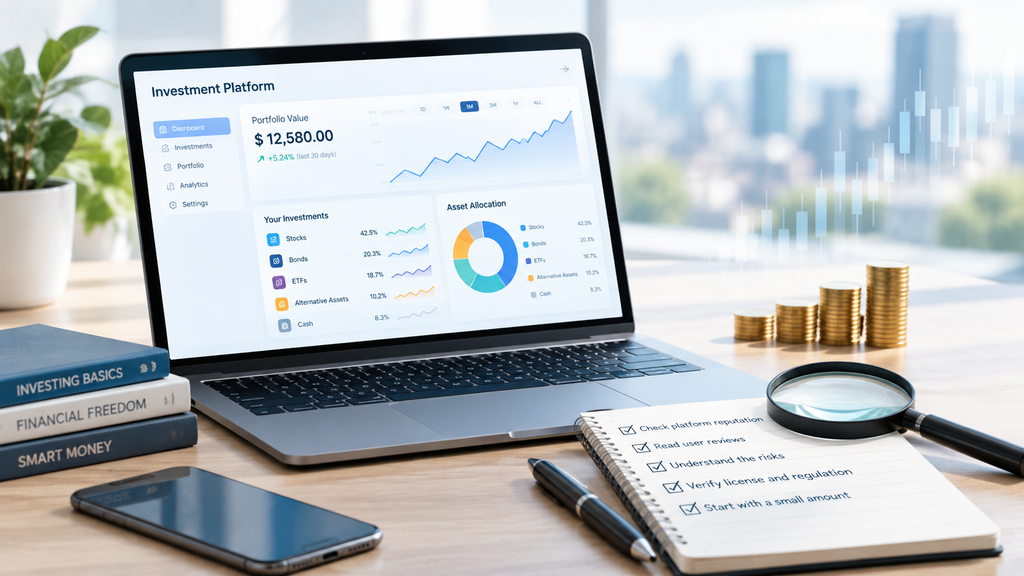
What Does an Investment Platform Actually Do?
Think of an investment platform as the place between you and the investment you want to make.
You create an account, add money, choose an investment, and then use the platform to keep track of what is happening.
For example, a typical process might look something like this:
- You open an account.
- The platform may ask you to verify your identity.
- You deposit money.
- You choose an investment or investment strategy.
- You monitor your account.
- You withdraw money when the platform’s rules allow it.
Of course, the details can be very different from one service to another.
Some platforms are designed for people who want to buy shares or ETFs. Others focus on crypto, automated investing, trading, or alternative investments.
So before asking whether a platform is “good,” it makes sense to first understand what it actually does.
What Can You Invest In?
There is no single list of investments offered by every platform.
Depending on the service, you may find:
- Stocks
- ETFs
- Bonds
- Mutual funds
- Cryptocurrencies
- Managed portfolios
- Trading products
- Alternative investments
- Fixed-term investment opportunities
The difference between these products can be significant.
For instance, buying a diversified ETF is not the same type of investment as putting money into a cryptocurrency trading platform or an alternative investment website.
If you are new to the subject, our article about Digital Investing is a useful place to start.
The Platform and the Investment Are Not the Same Thing
This is an easy distinction to miss.
The platform is the service you use.
The investment is what your money is actually invested in.
Imagine that you use a particular website to buy shares. The website is the platform, while the shares are the investment.
This matters because a platform can offer several different products, and each one can have its own risks.
So don’t judge an investment simply by looking at the website you use to access it.
What Should You Check Before Depositing Money?
You don’t need to become a financial expert to do some basic checks.
A few minutes of research can answer some important questions.
Start With the Company
First, find out who is actually behind the website.
Look for the company’s legal name, address and contact details. Check the site’s Terms and Conditions and Privacy Policy as well.
If you can spend several minutes browsing a website but still cannot work out who operates it, that is worth noticing.
It doesn’t automatically mean the platform is fraudulent. It simply means you have more research to do.
Check Any Regulatory Claims
Some investment platforms say that they are licensed or regulated.
If you see a licence number or the name of a regulator, don’t stop there.
Try to verify the information through the regulator’s own website or database. This is more useful than simply trusting a logo or licence number displayed on the platform.
Being regulated also doesn’t mean that an investment cannot lose money. It simply gives you more information about the company and the rules under which it operates.
Understand How Withdrawals Work
This is one of the checks I would do before depositing rather than after.
Look at the withdrawal section and find out:
- How can you withdraw?
- Is there a minimum withdrawal?
- Are there fees?
- How long are withdrawals supposed to take?
- Is identity verification required?
- Are there conditions attached to withdrawing your funds?
Some platforms make deposits extremely easy while providing much less information about withdrawals.
That’s a reason to slow down and read the details.
We cover this research process in more detail in How to Research an Online Investment Platform Before Your First Deposit.
Look Carefully at the Promised Returns
This is another area where you should take your time.
An investment that promises very high returns deserves more questions, particularly if the website also suggests that there is little or no risk.
There is a simple reason for this: in investing, higher potential returns generally come with higher risks.
No attractive percentage on a website changes that basic principle.
This doesn’t mean that every high-return investment is automatically fraudulent. It means you should understand where the return is supposed to come from and what could happen if things don’t go according to plan.
If a website makes unusually strong promises, take a look at our guide to Investment Website Red Flags.
Don’t Skip the Terms and Conditions
I know — nobody enjoys reading Terms and Conditions.
Still, when money is involved, they are worth checking.
You don’t necessarily have to read every word. Start with the sections covering deposits, withdrawals, fees, account restrictions and investment periods.
Also look for anything that could affect your ability to access your money.
For example, some services may have minimum investment periods or specific withdrawal requirements.
If an important condition is difficult to find or the wording is unclear, don’t simply assume that everything will work the way you expect.
A Professional Website Doesn’t Prove Very Much
A modern website can certainly make a good first impression.
But good design is not proof that an investment platform is legitimate.
The same applies to:
- Professional-looking logos
- Customer testimonials
- Large profit figures
- Social media followers
- Marketing videos
- Claims about an experienced team
These things can provide context, but they should not replace independent research.
The more money you are considering investing, the more important this becomes.
What About HYIP Websites?
You may also come across investment websites describing themselves as HYIPs, or High-Yield Investment Programs.
These websites are generally associated with offers of unusually high returns, sometimes over relatively short periods.
If you encounter one, it is worth doing considerably more research before sending money.
We’ve covered this subject separately in HYIP Platform: What It Is, How It Works, and What to Check Before Investing.
For a shorter introduction, you can also read What Is HYIP?.
The key point is simple: don’t confuse a promised return with a guaranteed result.
A Few Common Mistakes
When people start looking at online investment platforms, some mistakes come up again and again.
Choosing Based on the Highest Return
A bigger number can be tempting.
But the return alone tells you very little about the investment. You also need to understand the risks and how the return is generated.
Depositing Before Doing the Research
It’s easy to see an interesting opportunity and immediately want to try it.
There is usually no good reason to rush.
Researching the company, checking the terms and understanding withdrawals should happen before you deposit.
Assuming Other People’s Reviews Are Proof
Reviews can be useful, but don’t treat them as definitive evidence.
A handful of positive comments doesn’t prove that a platform is reliable. The same is true of a handful of negative comments.
Look for information from several independent sources and compare what you find.
Ignoring the Withdrawal Process
This one is particularly important.
Before depositing, try to understand exactly how you would get your money back.
If you can’t find a clear answer, that’s something to investigate before moving forward.
A Simple Checklist
Before using an online investment platform, I would want to be able to answer these questions:
- Who operates the platform?
- Is the company information easy to find?
- Does the platform claim to be regulated?
- Can that claim be verified independently?
- What exactly would I be investing in?
- Where are the potential returns supposed to come from?
- What could cause me to lose money?
- How do deposits and withdrawals work?
- Are there fees or withdrawal restrictions?
- What does the Terms and Conditions say?
- Can I find independent information about the company?
You don’t need every answer to be perfect.
But if several basic questions remain unanswered, that’s a good reason to stop and do more research.
Final Thoughts
An investment platform is simply a digital service that helps you access or manage an investment.
The difficult part isn’t understanding the term. The difficult part is working out whether a particular platform is suitable for what you want to do and whether you understand the risks involved.
Before depositing, look beyond the website’s design and marketing.
Find out who operates the service. Check any regulatory claims. Read the withdrawal rules. Understand what you are actually investing in and where the advertised returns are supposed to come from.
Most importantly, don’t let an attractive opportunity pressure you into making a quick decision.
A few minutes of research before a deposit can be much more useful than trying to solve a problem after the money has already been sent.
For more practical guides about online investing, platform research and potential warning signs, explore OnlineInvestWatch.