
One of the most stressful things for a HYIP investor is seeing a withdrawal stuck on pending.
At first, it might just look like a typical technical delay. The platform might claim the payment is being processed, blame the blockchain, or have support promise that your funds are on the way. Sometimes, these delays really are just technical hiccups. However, there are certain situations where a withdrawal problem is a major red flag that needs much closer attention.
The most important thing is to stay calm. Don’t panic, and whatever you do, don’t send extra money just because someone tells you it’s necessary. If you’re new to HYIPs, you might want to start with our guide: What Is HYIP? A Complete Guide to High-Yield Investment Programs.
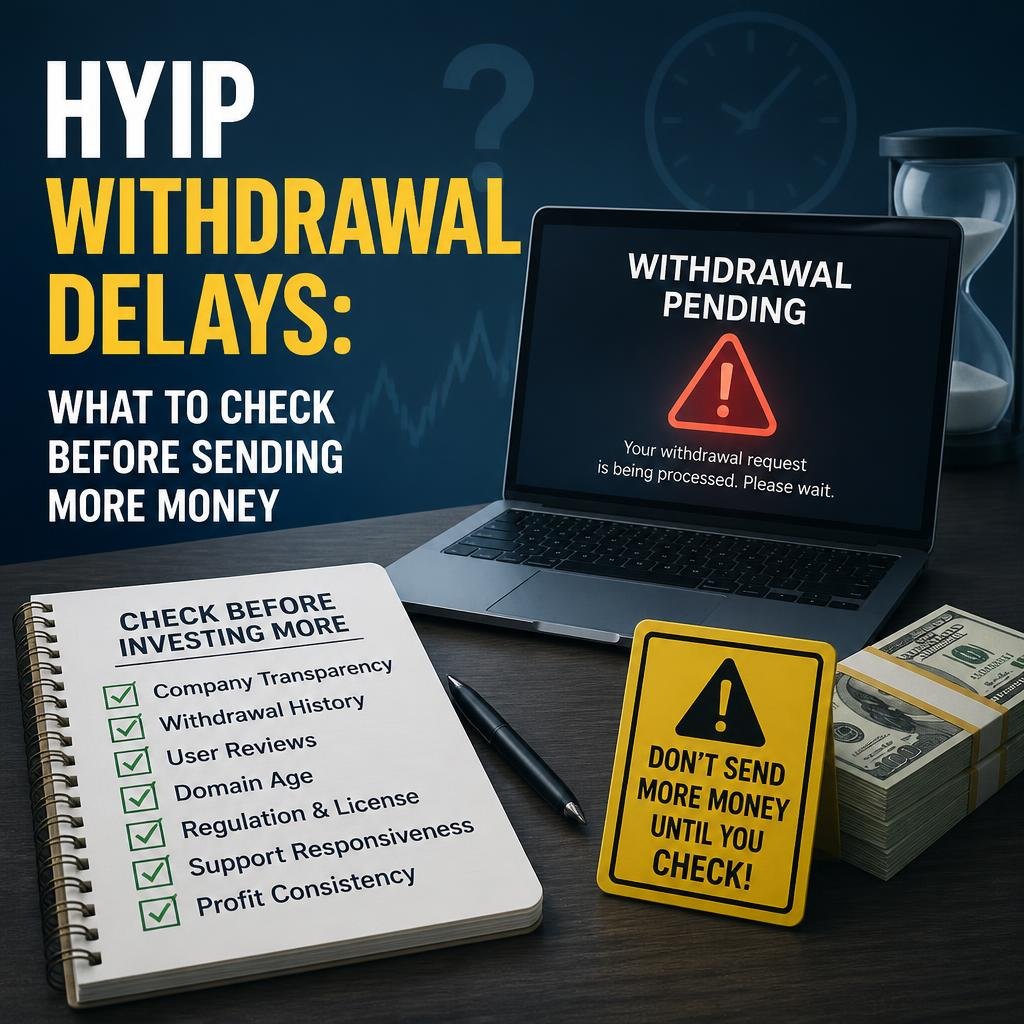
A Pending Withdrawal Is Not Proof of a Scam
Just because a withdrawal is pending doesn’t mean the platform is a scam. There are plenty of legitimate reasons for a delay, such as:
Blockchain congestion
Manual processing
Weekends or holidays
Internal compliance checks
Incorrect wallet info
Minimum withdrawal limits
Temporary technical glitches
The real trouble starts when the explanations keep changing or if the platform starts asking for more money before they’ll process your withdrawal.
Check the Original Withdrawal Request
Start by looking closely at the transaction itself. Check the date, time, amount, the specific cryptocurrency, the destination address, the network used, the current status, and the transaction ID if there is one.
If the platform claims the transaction has already been sent to the blockchain, ask them for the transaction hash. A real blockchain transaction should be easy to verify on a blockchain explorer. If they can’t provide a hash because the funds haven’t actually been sent, then the issue is definitely on their end.
Ask One Clear Question
Instead of flooding support with emotional messages, try asking one simple, direct question: Has my withdrawal been broadcast to the blockchain?
If they say yes, ask for the transaction hash. If they say no, ask exactly when they expect to send it. Getting a clear answer gives you something concrete to work with. Vague excuses like the system is updating or the network is being synchronized don’t really tell you anything useful.
Be Careful With Additional Fees
This is a huge one to watch out for. A platform might tell you that you need to pay for things like:
Taxes
Insurance
A security deposit
Verification fees
Wallet activation fees
Anti-money-laundering fees
Network release fees
Not every fee is a scam. Some legitimate financial services do charge them. The real question is whether these fees were clearly stated before you invested and if the explanation makes sense. If a fee suddenly pops up only after you try to withdraw your money, you should be extremely cautious.
Do Not Chase a Withdrawal With Another Deposit
Imagine you have 300 dollars on a platform and support tells you that if you send another 100 dollars, your withdrawal will be released. This changes everything. You aren’t just waiting for money anymore; you’re being asked to increase your financial risk before you even get what you’re owed. Before you send a single cent, stop and investigate. If the explanation feels off, sending more money might just mean you’re losing even more.
Compare the Problem With the Published Terms
Go back and read the platform’s Terms and Conditions. Look specifically for details on withdrawal times, minimum amounts, fees, verification steps, account restrictions, lock-up periods, or bonus conditions. If what they are telling you now doesn’t match the rules they had in place when you deposited, take screenshots of both. Also, keep copies of all your emails and chat logs.
Search for Other Withdrawal Reports
Try searching the website’s domain along with phrases like:
withdrawal pending
withdrawal problem
withdrawal fee
cannot withdraw
USDT withdrawal
payment pending
Try to find several independent reports rather than just one person complaining on a forum. If you see a pattern where people deposit, see profits, try to withdraw, and then get hit with unexpected fees, pay close attention.
Check Whether the Platform Is Still Active
Sometimes a delay is just part of a larger technical issue. Check if the website is still online, if the login works, if they are still accepting new deposits, if support is responding, and if their social media is active. If a platform is aggressively pushing people to make new deposits while existing withdrawals are stuck, that is a massive red flag.
Keep Evidence
Make sure to save everything:
Deposit transaction hashes
Withdrawal requests
Screenshots of everything
Emails and chat conversations
Wallet addresses
The original terms and conditions
All support responses
This info will be vital if you eventually need to report the platform to an exchange, a payment provider, or a regulator.
What If the Withdrawal Finally Arrives?
If you do get your money, that’s great, but it doesn’t automatically mean the platform is safe. One successful transaction only proves that one transaction worked. If you decide to keep using a high-risk platform, keep a close eye on how they handle withdrawals rather than assuming one successful payment guarantees your future access to funds.
A Simple Decision Point
When a HYIP withdrawal is delayed, just ask yourself three things:
- Is there a verifiable technical explanation?
- Does the explanation match the platform’s own rules?
- Are they asking me to send more money before I get my current funds?
That third question is the most important. If a platform asks for more money to unlock your balance, the safest move is to stop and verify everything rather than reacting in a hurry.