
Searching for HYIP info usually leads to pages filled with investment plans, percentages, ratings, payment screenshots, and claims about profitability.
But there is a problem.
A HYIP website can give you a lot of information without necessarily giving you the right information.
The advertised return may be easy to find. The minimum deposit may be displayed on the homepage. A referral bonus may be impossible to miss.
The information that matters most to an investor is often much harder to find.
This guide takes a different approach. Instead of simply explaining what a HYIP is, it shows you how to read the information surrounding a high-yield investment program and what individual data points can — and cannot — tell you.
The First Rule: Separate Facts From Claims
The first step in researching a HYIP is separating what the program claims from what can actually be verified.
Consider a typical investment website.
It may say that it has:
- Experienced professionals
- Advanced trading strategies
- International operations
- Secure infrastructure
- Years of financial experience
- A profitable investment model
- Regular investor payouts
Those statements may sound convincing.
But they are still statements made by the operator.
A better research process asks a different question:
What evidence exists outside the operator’s own marketing?
This distinction is one of the most useful pieces of HYIP information an investor can understand.
The HYIP Information Triangle
When researching a program, think about three separate layers of information.
Layer 1: What the Website Says
This includes:
- Investment plans
- Advertised returns
- Company information
- Payment methods
- Referral commissions
- Terms and conditions
- Promotional statements
This information tells you how the operator wants the program to be presented.
It does not independently prove that the claims are accurate.
Layer 2: What Other Sources Say
The second layer includes:
- Independent reviews
- HYIP monitors
- Investor discussions
- Domain information
- Historical records
- Reports of successful or failed withdrawals
This can provide useful context.
However, third-party information also needs to be evaluated carefully. A review is not automatically reliable simply because it appears on a different website.
Layer 3: What Can Be Observed
The strongest information is often based on something that can actually be observed over time.
For example:
- How long has the website remained online?
- Are withdrawals being reported?
- Are withdrawal conditions changing?
- Does the program continue operating after its initial launch?
- Are complaints increasing?
- Does the website disappear and return under a different domain?
- Are historical claims still consistent with current information?
This is where HYIP research becomes much more interesting than simply reading an investment plan.

Why the Age of a HYIP Can Be Misleading
One of the most commonly misunderstood pieces of HYIP information is website age.
A website that has existed for several months may appear more established than a website launched yesterday.
But age alone does not prove legitimacy.
A long-running website can still fail, stop withdrawals, change ownership, or significantly alter its business model.
Likewise, a new website is not automatically fraudulent.
The useful question is not simply:
“How old is this HYIP?”
Instead ask:
“What has happened during that time?”
A longer operating history becomes more meaningful when combined with consistent and independently observable activity.
The Most Interesting Number May Be the Withdrawal History
Many HYIP websites focus heavily on the percentage they advertise.
For investors, another number may be much more useful:
How consistently are withdrawals actually being completed?
A program can advertise an attractive daily or monthly return. That number represents an expectation created by the operator.
Withdrawal history is different.
It concerns what investors report actually happening.
This does not make every payment report proof of legitimacy. A program can process withdrawals during one period and experience problems later.
That is why patterns over time are more useful than isolated screenshots.
Why “Paying” Does Not Mean “Safe”
HYIP monitors may use labels such as “Paying,” “Waiting,” “Problem,” or “Scam.”
These labels can be useful, but they should be understood correctly.
For example, a monitor may classify a program as paying because a test withdrawal was successfully received.
That is evidence of a successful withdrawal at a particular point in time.
It is not a guarantee that the program will continue paying tomorrow.
Some monitoring services explicitly warn that a current paying status is not a prediction of future performance.
This is an important distinction that is often lost when investors look only at rankings.
The “Return Percentage” Trap
Imagine two programs:
Program A: 2% daily
Program B: 10% monthly
At first glance, Program A looks much more attractive.
But the percentage itself tells you almost nothing about whether the underlying business model is sustainable.
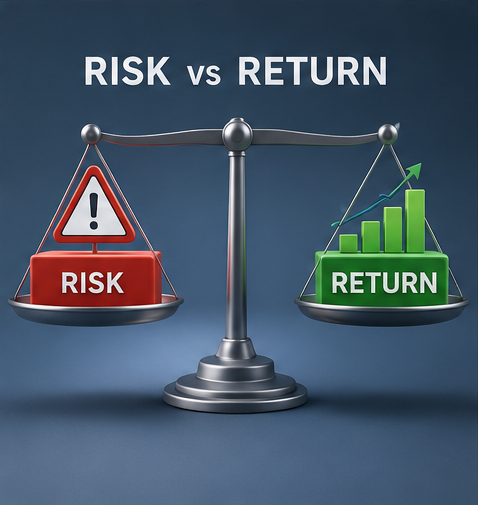
An extremely high advertised return should increase the amount of due diligence you perform — not decrease it.
The U.S. SEC’s Investor.gov specifically warns that HYIP scams commonly promote extraordinary returns with little or no risk.
The right question is therefore not:
“Which HYIP has the highest return?”
It is:
“What information supports the return being advertised?”
Read the Investment Plan Backwards
Here is a simple research trick.
Instead of starting with the headline return, start with the conditions surrounding it.
Look at:
- Minimum deposit
- Investment duration
- Withdrawal rules
- Withdrawal fees
- Principal return
- Compounding rules
- Account restrictions
- Early withdrawal conditions
- Referral requirements
- Changes to the terms
Only after understanding these conditions should you look at the advertised percentage.
This approach prevents the headline number from dominating your analysis.
Watch for Changes, Not Just Red Flags
Investors often search for obvious warning signs.
But changes can sometimes be more informative.
Pay attention if a program suddenly changes:
- Investment plans
- Minimum deposits
- Withdrawal limits
- Processing times
- Accepted cryptocurrencies
- Referral commissions
- Domain names
- Company descriptions
- Terms and conditions
One change does not automatically mean something is wrong.
A series of unexplained changes, however, deserves closer attention.
Why Crypto Transactions Need Extra Attention
Many modern HYIPs use cryptocurrencies such as Bitcoin, Ethereum, or stablecoins.
Crypto can make international transfers fast and convenient.
But a blockchain transaction only demonstrates that funds moved from one address to another.
It does not prove:
- Who controls the receiving wallet
- What the money will be used for
- Whether the business model is sustainable
- Whether future withdrawals will be processed
Blockchain transparency and investment transparency are therefore two different things.
The Referral System Deserves Its Own Investigation
Referral programs are common in the HYIP ecosystem.
A program may offer commissions for introducing new investors.
Referral commissions themselves do not prove that a program is fraudulent.
However, an aggressive referral structure can influence how information about a program spreads online.
If people earn money for bringing new members into a program, some reviews or recommendations may have a financial incentive behind them.
That does not automatically make the information false.
It simply means the incentive should be considered.
A Better Way to Read HYIP Monitor Ratings
HYIP monitors can be useful because they collect information that would otherwise require visiting many different websites.
Some monitors track payment history, program age, monitoring periods, investor reports, or scam records.
But never treat a monitor ranking as a substitute for research.
A useful monitor should help answer questions such as:
How long has the program been tracked?
Has the monitor actually tested withdrawals?
When was the last successful payment observed?
What happened when payments were delayed?
Is the listing independently verified or simply copied from the operator?
These questions are considerably more valuable than simply asking which program appears at number one.
Build a HYIP Research Snapshot
Before making any decision, create a simple snapshot of the program.
HYIP Research Snapshot
Domain age:
How long has the current domain existed?
Advertised return:
What return is being promised?
Investment period:
How long is capital locked?
Withdrawal method:
How are withdrawals processed?
Withdrawal history:
Are there consistent reports of completed withdrawals?
Monitoring status:
Is the program independently monitored?
Monitoring duration:
How long has it been monitored?
Terms changes:
Have important conditions changed recently?
Company information:
Can the operator’s claims be independently checked?
External reputation:
What are independent sources saying?
This snapshot gives you a much clearer picture than a homepage banner promising a large return.
The Difference Between “Information” and “Proof”
This may be the most important concept in HYIP research.
A website showing a company registration number is information.
A registration that can be independently verified is stronger evidence.
A screenshot of a withdrawal is information.
A consistent history of independently observed withdrawals is stronger evidence.
A five-star rating is information.
A transparent methodology explaining how the rating was calculated is more useful.
A claim of “10 years of experience” is information.
Evidence supporting that claim is something different.
Good HYIP research is therefore not about collecting the largest amount of information.
It is about finding the information that is hardest to fake.
A Five-Minute HYIP Research Test
If you only have five minutes to investigate a program, focus on these questions:
1. What exactly is being promised?
Write down the return and investment period.
2. Does the return make sense for the claimed strategy?
Look for a clear explanation rather than vague financial terminology.
3. What are the withdrawal conditions?
Do not skip the small print.
4. What do independent sources report?
Search for both successful and unsuccessful experiences.
5. Has the program been observed over time?
Look for historical information rather than only today’s status.
If several answers remain unclear, that uncertainty itself is useful information.
Why “No Information” Is Information
Sometimes the most important result of research is discovering what you cannot verify.
If a program provides little information about its operators, business activities, financial model, or withdrawal process, you should not fill those gaps with assumptions.
Unknown does not mean safe.
Unknown means unknown.
That distinction is particularly important when dealing with high-risk investment opportunities.
The HYIP Information Checklist
Before trusting information about any HYIP, ask:
- Who created the information?
- Can the claim be independently verified?
- Is there a financial incentive behind the recommendation?
- Is the information current?
- Does historical information support the claim?
- Are negative reports being addressed?
- Have important terms changed?
- Is the source transparent about its methodology?
- Is a current status being presented as a guarantee?
- What information is still missing?
These questions turn passive browsing into actual research.
Final Thoughts: Don’t Search for the “Best” HYIP — Search for Better Information
The goal of researching HYIPs should not be to find a website with the biggest percentage or the most attractive investment plan.
The better goal is to understand what you actually know and what you do not know.
A high return is a claim.
A professional-looking website is a presentation.
A rating is an opinion or methodology.
A successful withdrawal is an observation.
A long history of independently documented activity is stronger evidence.
And none of these, individually, eliminates investment risk.
If you are researching high-yield investment programs, use multiple sources, check information over time, and never treat a monitoring status or advertised return as a guarantee.
The best HYIP information is not the information that makes an investment look attractive.
It is the information that helps you understand the risks before you make a decision.