
Finding a new crypto investment platform is easy, but deciding whether you should trust it with a large sum of money is a much tougher call.
A website might look great, featuring a modern design, professional charts, various payment methods, and impressive investment plans. However, none of those things actually prove that you will be able to withdraw your funds later.
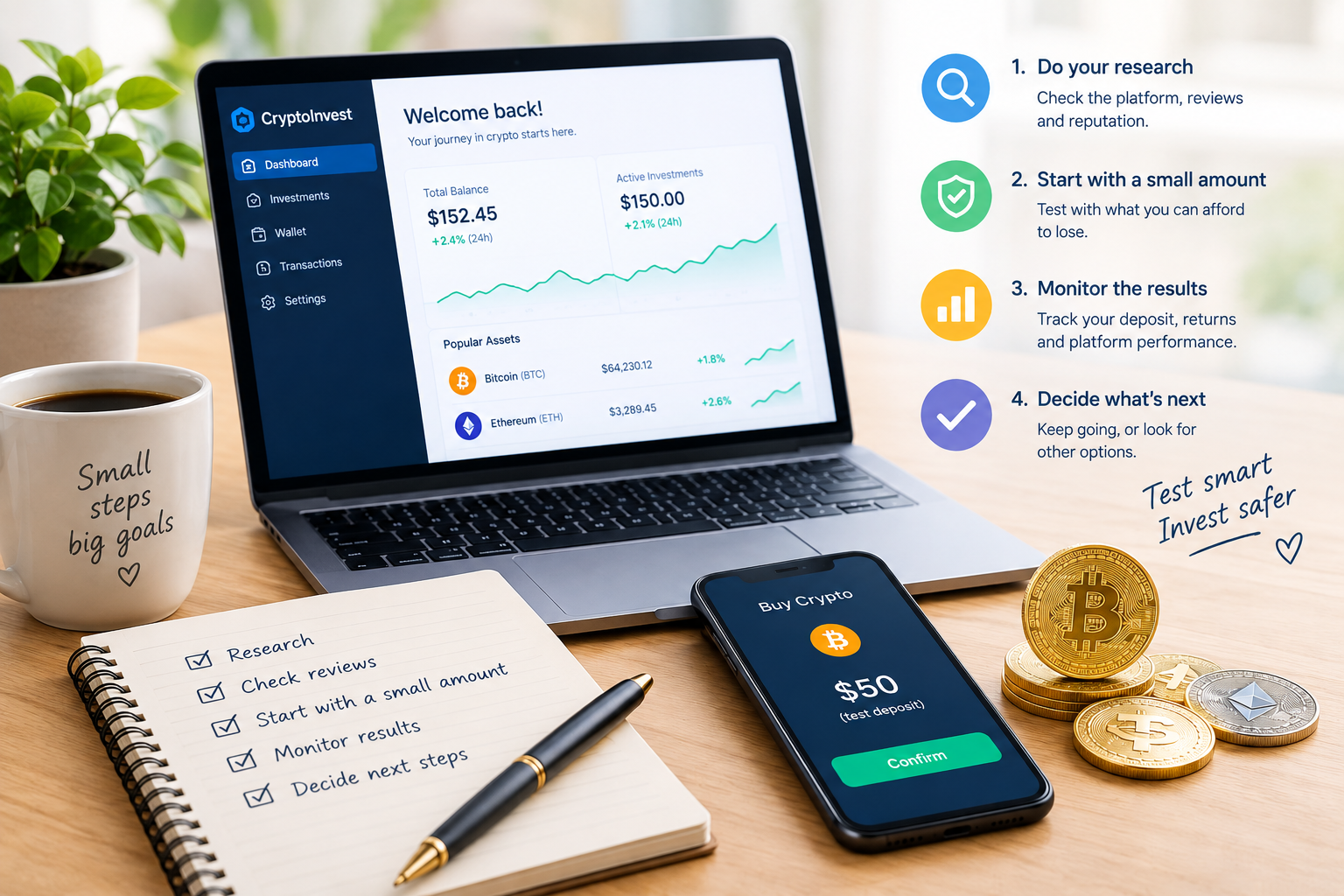
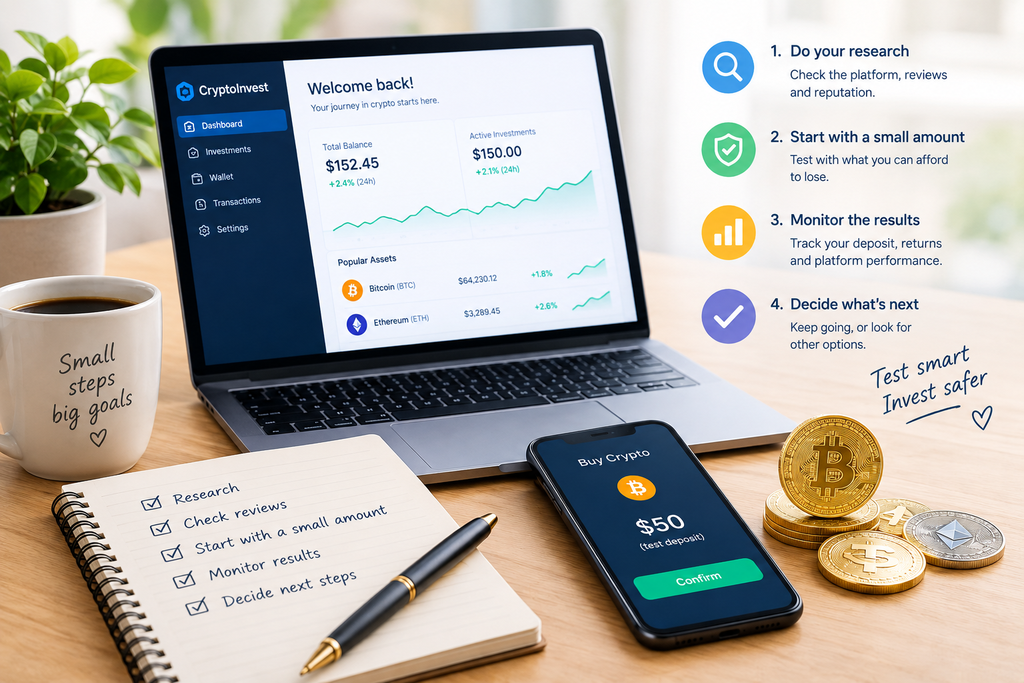
One practical way to get a feel for an unfamiliar platform is to start with a small amount instead of immediately committing a huge chunk of your crypto holdings. This doesn’t make the investment safe, but it does limit your exposure while you figure out how the platform operates.
Check the Platform Before Depositing
A small deposit shouldn’t replace basic research. Before you send anything, make sure to check the company information, domain history, investment terms, and withdrawal rules. You should also look into fees, supported networks, contact info, independent reviews, and any relevant regulatory details.
Our article [USDT Investment Platforms: What to Check Before Sending Crypto] goes into much more detail on these specific checks.
Use a Separate Wallet
If you’re testing out a new platform, it’s a good idea to use a wallet that doesn’t hold the majority of your crypto. The logic is simple: keep your test funds separate from your main holdings. That way, if you accidentally interact with the wrong site or send funds to the wrong address, the damage is limited.
For beginners, our guide How to Choose a Crypto Wallet for Small Amounts: A Beginner’s Guide explains the different types of wallets and what to look for before using one.
Send a Small Test Transaction
Before you make a larger deposit, double-check the exact cryptocurrency, network, deposit address, minimum deposit amount, and any required memo or tag. Then, send a small amount. Whatever you do, don’t just copy an address from an old transaction without verifying it again. Always check crypto addresses right before you hit send.
Confirm That the Deposit Was Credited
Once you’ve sent the transaction, check the blockchain first, then check your account on the investment platform. These two pieces of information should match up. If the blockchain shows the transaction is confirmed but your platform balance hasn’t changed after a long time, reach out to support and ask for a specific explanation. Make sure to keep your transaction hash handy.
Read the Withdrawal Process Before Investing More
Just because your deposit shows up doesn’t mean you should immediately add more money. First, see if you can actually request a withdrawal under the platform’s standard rules. Pay attention to the minimum withdrawal amount, fees, processing times, verification requirements, and available networks. If the platform has a low minimum withdrawal, you might be able to test the entire cycle of depositing and withdrawing with just a small amount.
What a Successful Withdrawal Tells You
A successful withdrawal is useful information, but it isn’t a guarantee. It confirms that the platform processed a withdrawal for you at that specific moment, but it doesn’t prove that future withdrawals will always work, that the company is financially stable, or that the advertised returns are real. It also doesn’t guarantee the platform will stay online or that larger withdrawals will be handled the same way. Think of the test as gathering data, not as a certificate of safety.
Watch How Support Responds
Customer support can tell you a lot. Try asking simple questions like:
“How long do USDT withdrawals usually take?”
“What is the minimum withdrawal amount?”
“Is there any extra verification needed?”
“Which network is used for USDT withdrawals?”
Pay attention to whether their answers are clear and consistent. You should also check if what they tell you actually matches their published terms.
Be Careful With High-Return Investment Plans
A small test deposit doesn’t eliminate investment risk. If a platform is promising unusually high daily or weekly returns, you need to dig into how they actually make that money. Ask yourself: What is the underlying strategy? Is there any evidence of this activity? Are the returns fixed? What happens when the market is down? Is the company being transparent about the risks? A high advertised return shouldn’t be taken as proof that the investment is successful.
Don’t Increase Your Deposit Just Because the Dashboard Shows Profit
This is a common trap. You deposit $100, and a few days later, the dashboard says you have $112. It’s tempting to think everything is working perfectly and decide to deposit $1,000. But remember, a displayed balance isn’t the same as money in your pocket. Until you can actually withdraw those funds according to the rules, treat that dashboard balance with caution.
Look at the Withdrawal Experience
Pay close attention to what happens when you try to get your money back. A normal process should have clear, defined steps. Be very wary if you suddenly run into:
Unexpected fees or new verification requirements
A sudden change in the minimum withdrawal amount
Requirements to deposit even more money to get your funds
Changing explanations or long delays
Pressure to reinvest your money
If the process gets complicated the moment you ask for your money, stop and investigate before sending anything else.
Keep Your Own Records
It’s smart to keep a simple log of your transactions. For deposits, note the date, amount, currency, network, and transaction hash. For withdrawals, record the date, amount, fee, transaction hash, and when it was actually received. It’s also a good idea to save screenshots of the investment plans and withdrawal rules. This gives you a much clearer picture of what actually happened if something goes wrong.
When Not to Increase the Amount
There are several times when increasing your deposit makes no sense from a due diligence standpoint. For instance, don’t add more if:
The company can’t be verified
Withdrawal rules are vague
Support gives contradictory answers
The platform asks for more money to release your existing funds
The website recently changed its terms
You see independent complaints about withdrawal issues
The high returns have no convincing explanation
A single successful small transaction shouldn’t make you ignore multiple red flags.
Final Thoughts
Testing an unfamiliar platform with a small amount can give you a good idea of how their deposits, withdrawals, and support work. But remember, this test is just one part of your research, not a guarantee of safety.
The most important rule is this: don’t let one successful small transaction convince you to ignore warning signs that would worry you if you were investing a larger amount. Research the company, understand the rules, verify everything on the blockchain, and keep your own records. Only increase your exposure if you are truly comfortable with the risks. When it comes to crypto, spending a few extra minutes checking can be worth much more than any promised return.