
If you are just starting with cryptocurrency, you may not need an expensive hardware wallet immediately. For smaller amounts, many users prefer a simple software wallet that makes sending, receiving and managing crypto convenient.
However, “small amount” does not mean that security is unimportant. Even a relatively small crypto balance can become difficult or impossible to recover if you lose access to your wallet or expose your recovery phrase.
This guide explains what to look for when choosing a crypto wallet for small amounts and everyday use.
What Is a Crypto Wallet?
A crypto wallet is a tool that allows you to manage the keys needed to access and transact with digital assets.
Your cryptocurrency is recorded on a blockchain rather than physically stored inside the wallet application. The wallet provides the interface and cryptographic keys needed to interact with those assets.
Wallets can generally be divided into custodial and non-custodial options.
With a custodial wallet, a company or exchange controls the private keys on your behalf. With a non-custodial wallet, you are responsible for your own keys and recovery information.
Is a Software Wallet Good for Small Amounts?
For many beginners, a reputable software wallet can be a practical choice for a relatively small balance.
Software wallets are usually available as mobile applications, desktop applications or browser extensions. They are convenient because you can access your crypto without carrying a separate physical device.
They can be particularly useful for:
- Small cryptocurrency balances
- Regular transactions
- Learning how self-custody works
- Sending and receiving crypto
- Using selected blockchain applications
- Short-term or everyday crypto use
Bitcoin.org similarly recommends keeping only relatively small amounts on computers or mobile devices for everyday use and considering stronger storage for larger balances.
What Should You Check Before Choosing a Wallet?
Don’t choose a wallet only because it is popular. A few basic factors are more important.
1. Security and Recovery
The first question is how the wallet protects and recovers access.
If a wallet gives you a recovery phrase, understand that phrase before transferring funds. It should be kept offline and never shared with another person.
Do not store your recovery phrase in:
- Cloud storage
- Social media messages
- Screenshots
- Public notes
- Websites claiming to provide wallet support
Anyone who obtains the recovery information may be able to access the assets controlled by it.
2. Supported Networks
Check which blockchain networks the wallet actually supports.
For example, someone holding Bitcoin has different requirements from someone using Ethereum, Solana or tokens on multiple networks.
Before making a transfer, always check that the receiving wallet supports the particular asset and network you intend to use.
Sending an asset through an incompatible network can create serious problems.
3. Ease of Use
A complicated wallet can increase the chance of making a mistake.
For beginners, look for an application with:
- Clear transaction screens
- Easy backup instructions
- Straightforward address management
- Transparent fees
- Good documentation
- Regular software updates
The best wallet is not necessarily the one with the most features. It is the one you can use correctly.
4. Fees
Wallet applications may not control the blockchain network fee itself, but the total cost of using a wallet can still vary depending on the transaction and any additional services.
Before confirming a transaction, check the network fee and the amount you are actually sending.
This is particularly important when transferring a small amount. A transaction fee that seems insignificant on a large portfolio can represent a meaningful percentage of a small balance.
Hot Wallet vs Hardware Wallet for Small Amounts
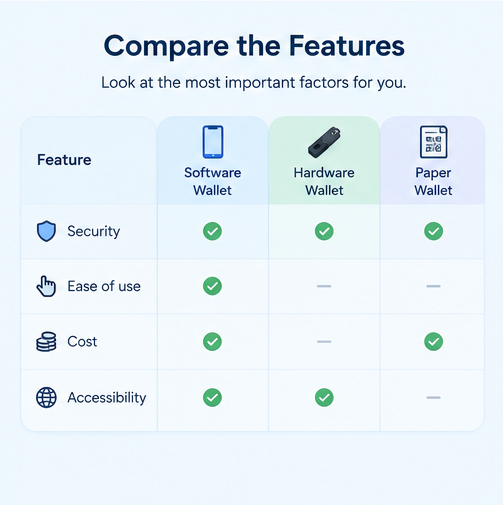
A software wallet is generally considered a hot wallet because it is connected to an internet-enabled device.
A hardware wallet keeps important signing information in a dedicated physical device and is generally considered a stronger option for long-term storage.
That does not mean everyone needs a hardware wallet from day one.
A simple approach can be:
Small amount + frequent use → software wallet
Larger amount + long-term storage → consider a hardware wallet
This is not a universal rule, but it is a useful starting point for beginners. Hardware wallets can provide stronger protection against some online threats, while software wallets offer greater convenience.
Should You Keep Crypto on an Exchange?
Keeping a small amount on an established exchange can be convenient, especially if you are actively trading.
However, an exchange account and a self-custody wallet are not the same thing.
With self-custody, you control the recovery information and are responsible for protecting it. With a custodial service, you depend on the company to maintain access to your assets.
Bitcoin.org warns that users of online services are relying on the provider’s security and continued availability.
For beginners, the important thing is to understand which model they are using rather than assuming that every crypto wallet works in the same way.
A Simple Setup for Beginners
If you are starting with a small amount of cryptocurrency, you can keep your setup relatively simple.
Step 1: Choose a reputable wallet that supports the cryptocurrency and network you need.
Step 2: Download the wallet only from its official source.
Step 3: Create the wallet and carefully follow the backup instructions.
Step 4: Write down the recovery information offline and store it securely.
Step 5: Start with a small test transaction.
Step 6: Check the receiving address and network before confirming every transfer.
Step 7: Keep your wallet application updated.
You do not need to use every feature available in a wallet. If you are only receiving and holding a small amount of crypto, a simple setup may be safer than experimenting with unfamiliar applications.
Common Mistakes to Avoid
New crypto users often make avoidable mistakes.
Sharing the Recovery Phrase
No legitimate support agent should need your recovery phrase to “unlock” your wallet.
Downloading a Fake Wallet
Search results and advertisements can sometimes lead users to websites that imitate legitimate services. Always verify the official source before installing a wallet.
Sending a Test Transaction Without Checking the Network
A correct address on the wrong network can still result in problems. Confirm both the asset and network.
Keeping Everything in One Wallet
As your cryptocurrency holdings grow, consider separating everyday funds from longer-term holdings.
Clicking Unknown Links
Phishing websites may imitate exchanges, wallets or popular crypto services. Treat unexpected wallet connection requests with caution.
Where to Find More Crypto Wallet Information
There is no single best crypto wallet for everyone.
Your choice depends on the amount you hold, the cryptocurrencies you use, how frequently you transact and how much responsibility you want to take for securing your own keys.
For comparisons and additional information about different wallet types and popular crypto wallets, see our Crypto Wallets section.
There you can compare different wallet options and learn more before choosing one for your needs.
Final Thoughts
For small cryptocurrency amounts, a reputable software wallet can provide a convenient way to learn how crypto transactions and self-custody work.
The most important consideration is not simply the wallet’s brand or number of supported coins. Pay attention to security, recovery, supported networks, fees and how comfortable you are using the wallet.
As your cryptocurrency holdings increase, your security requirements may change. A setup that is appropriate for a small everyday balance may not be appropriate for a larger long-term portfolio.
The safest approach is to understand how your wallet works before depositing more money into it.