
High-Yield Investment Programs, commonly known as HYIPs, attract attention by offering potentially high returns over relatively short periods. However, high promised returns also come with significant risks. Before depositing money into any HYIP, it is important to perform your own research rather than relying on advertising, reviews, or recommendations from other users.
A professional-looking website does not automatically mean that an investment program is trustworthy. In fact, regulators warn that fraudulent investment websites can be designed to look convincing and credible.
So, how can you check whether a HYIP is legitimate or whether it shows warning signs of a possible scam?
1. Start With the Company’s Information
The first step is to find out who operates the HYIP.
Look for:
- The legal name of the company
- Registration details
- Physical business address
- Contact information
- Names of directors or founders
- Terms and conditions
- Privacy policy
- Investment agreements or other legal documents
Be careful if the website provides only an email address, Telegram account, or contact form without identifying the business behind the project.
A legitimate business should be willing to provide enough information for users to understand who is responsible for the service.
At the same time, the presence of a company registration number is not proof that an investment program is safe. Company information should always be independently verified.
2. Examine the Promised Returns
The promised return is one of the most important things to investigate.
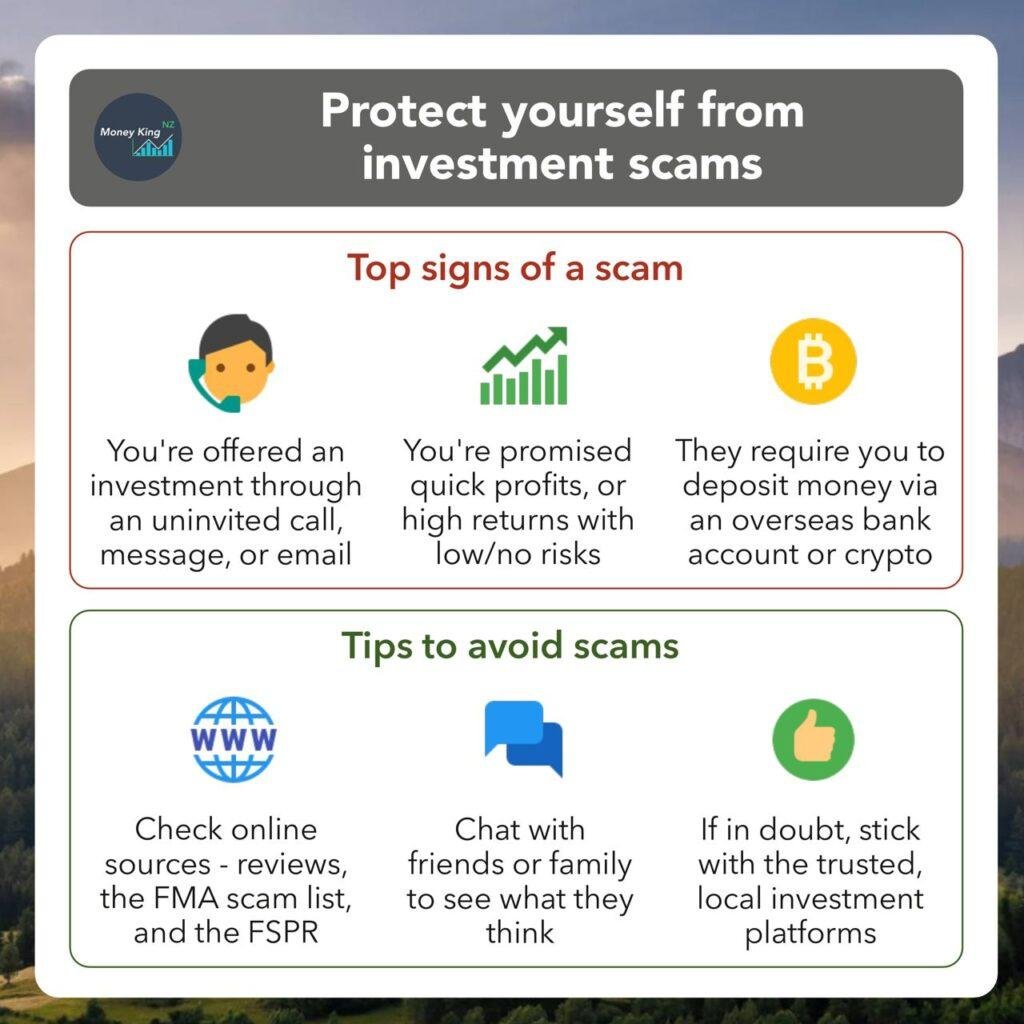
A HYIP offering extremely high returns while describing the investment as safe or guaranteed should immediately attract additional scrutiny.
For example, claims such as:
- “Guaranteed daily profit”
- “Zero risk”
- “Fixed high returns”
- “Your capital is 100% protected”
- “Double your money quickly”
are strong warning signs.
Investor.gov specifically identifies promises of extraordinary returns with little or no risk as a hallmark of HYIP fraud.
Remember a simple rule: higher potential returns normally mean higher risk. There is no investment strategy that can legitimately remove investment risk simply by using words such as “guaranteed” or “protected.”
3. Understand Where the Money Comes From
One of the most important questions is:
How does the program actually generate the advertised returns?
A HYIP may claim to generate profits through:
- Cryptocurrency trading
- Forex
- Artificial intelligence
- Mining
- Arbitrage
- Real estate
- Private lending
- Global financial markets
- Proprietary trading strategies
However, a list of impressive-sounding activities does not prove that those activities are actually taking place.
Look for a clear and understandable explanation of the business model.
If the explanation is intentionally vague, filled with complicated financial terminology, or impossible to verify, treat it as a warning sign.
4. Check Whether the Company Is Regulated
Depending on the country and the type of investment being offered, financial services may be subject to registration or licensing requirements.
If a HYIP claims to be a regulated financial company, verify that claim through the relevant regulator rather than trusting a logo displayed on its website.
This is especially important when a website displays statements such as:
“Fully licensed.”
“Government regulated.”
“Internationally authorized.”
“Registered financial institution.”
The claim should be independently checked.
SEC guidance also recommends checking whether an investment is registered and investigating the information available about the company and its management.
5. Investigate the Team
Look at the people behind the project.
Search for the names of the founders, directors, executives, or other individuals associated with the company.
Useful questions include:
- Do they have a verifiable professional history?
- Have they worked in finance before?
- Are their profiles consistent across different websites?
- Can their previous businesses be verified?
- Are their names associated with previous investment projects?
- Are they using real identities?
Be especially cautious when the people behind a financial project cannot be independently identified.
A profile on social media alone is not sufficient evidence of professional experience.
6. Look Beyond the HYIP’s Own Website
Never rely exclusively on information published by the investment program itself.
Search for independent information using the project name together with terms such as:
- scam
- review
- complaints
- withdrawal problems
- regulation
- company registration
- founder
- investor warning
Look for information from several independent sources.
However, remember that online reviews can also be manipulated. A large number of positive comments does not automatically prove that an investment program is legitimate.
Some fraudulent projects actively encourage users to post positive comments and testimonials.
7. Be Careful With HYIP Monitors and Reviews
HYIP monitoring websites can be useful research tools, but they should not be treated as official regulators.
A monitor may track:
- Website status
- Payment reports
- Program statistics
- User reviews
- Domain information
- Investment plans
This information can be helpful when comparing projects, but a monitor listing should never be interpreted as a guarantee that a HYIP is legitimate.
The same principle applies to YouTube reviews, Telegram channels, forums, and social media posts.
8. Test the Withdrawal Process
If you decide to investigate a program further, examine its withdrawal conditions carefully.
Check:
- Minimum withdrawal amount
- Processing time
- Fees
- Verification requirements
- Supported payment methods
- Withdrawal limits
- Restrictions on bonuses
- Conditions attached to deposits
A common warning sign is when withdrawing funds suddenly requires an unexpected additional payment.
For example, a user may be told that they must pay a “tax,” “unlock fee,” “verification deposit,” or “security payment” before their balance can be released.
Any unexpected demand for additional money deserves serious scrutiny.
9. Do Not Confuse Early Payments With Proof of Legitimacy
One of the biggest mistakes investors make is assuming:
“I received a withdrawal, therefore the program is legitimate.”
Unfortunately, an early successful withdrawal does not prove that a program is sustainable.
Fraudulent schemes can sometimes make payments to early participants in order to create confidence and encourage additional deposits.
In Ponzi-type schemes, money from newer participants may be used to pay earlier participants, creating the appearance of a successful investment operation.
Therefore, a successful withdrawal is only one piece of information—not proof that the entire business model is genuine.
10. Watch for Pressure to Deposit Quickly
Be cautious if a HYIP repeatedly tells you that you must invest immediately.
Common examples include:
“Only a few spots remain.”
“Deposit today to receive the highest rate.”
“This plan expires tonight.”
“VIP access closes in a few hours.”
“Do not miss this opportunity.”
Pressure is designed to reduce the amount of time you have to investigate the investment.
Regulatory guidance identifies pressure to invest quickly as a common warning sign of fraud.
A genuine investment opportunity should not require you to ignore basic due diligence.
11. Check the Domain and Website History
The website itself can provide useful clues.
Check:
- Domain registration date
- Website age
- Previous names or versions of the website
- Changes in ownership
- Website archives
- Consistency of company information
A very new website promising extraordinary returns deserves considerably more investigation than an established company with a long and independently verifiable operating history.
However, domain age alone is not proof of legitimacy or fraud.
12. Read the Terms Before Depositing
Never skip the Terms and Conditions simply because the investment plan looks attractive.
Pay attention to:
- How deposits work
- How profits are calculated
- Withdrawal rules
- Refund policies
- Account termination
- Fees
- Dispute resolution
- Governing law
- Company identity
If the legal documents are copied, incomplete, contradictory, or extremely vague, consider that another warning sign.
13. Don’t Trust a Beautiful Website
A modern design can create an impression of professionalism, but design is not evidence of financial credibility.
A website can have:
- Professional graphics
- Animated dashboards
- Live statistics
- Fake trading charts
- Testimonials
- Corporate photographs
- Security badges
and still provide no reliable evidence about where investor money actually goes.
The SEC similarly warns investors not to be fooled by sophisticated-looking websites or documents.
A Simple HYIP Due Diligence Checklist
Before making a deposit, ask yourself:
Company
- Can I identify the legal entity?
- Can I verify its registration?
- Can I identify the people behind it?
Investment
- Is the return realistic?
- Is risk clearly explained?
- Is anything described as “guaranteed”?
Business model
- Do I understand how the company supposedly makes money?
- Can its claims be independently verified?
Regulation
- Does the project claim to be regulated?
- Can I independently verify that claim?
Withdrawals
- Are the withdrawal rules clear?
- Are there unusual additional payments?
Reputation
- Can I find independent information?
- Are there credible complaints or regulatory warnings?
Pressure
- Am I being pushed to deposit immediately?
If several answers raise concerns, the safest decision may be not to invest.
Final Thoughts
There is no single test that can guarantee that a HYIP is legitimate.
The safest approach is to combine multiple forms of due diligence: verify the company, investigate the people behind it, examine the promised returns, understand the business model, check regulatory information, review withdrawal conditions, and search for independent evidence.
Most importantly, never treat a professional website, positive testimonials, or an early withdrawal as proof that your money is safe.
If you are researching a HYIP before making a decision, our detailed guide How HYIP Programs Work can also help you understand the basic structure of these programs and the mechanisms they commonly describe.
And if an opportunity promises extremely high returns with little or no risk, take a step back. That combination is one of the clearest warning signs identified by financial regulators.