
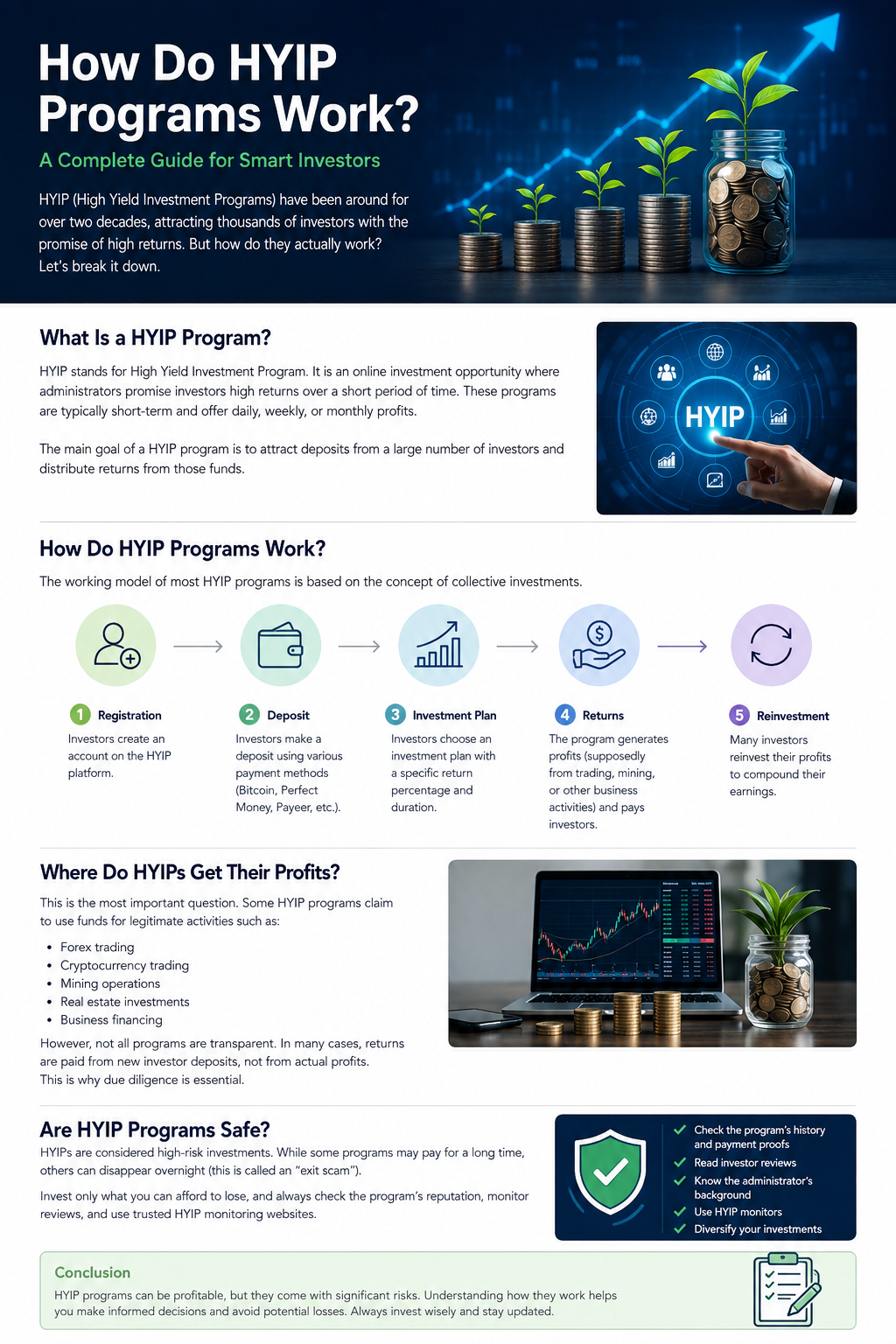
High Yield Investment Programs (HYIPs) have attracted attention online for many years by promising investors the possibility of earning unusually high returns over relatively short periods. These programs are often promoted through investment websites, forums, social media, referral networks, and cryptocurrency communities.
But how do HYIP programs actually work? Where are the promised returns supposed to come from, and what should investors look for before putting money into one?
In this guide, we explain the basic HYIP model, common investment structures, potential sources of returns, major risks, and the warning signs that every investor should understand.
Important: HYIPs are generally considered high-risk investments. Regulators such as the U.S. Securities and Exchange Commission warn that many HYIPs are unregistered and may be fraudulent. Promises of extremely high returns with little or no risk are a major warning sign.
What Is a HYIP?
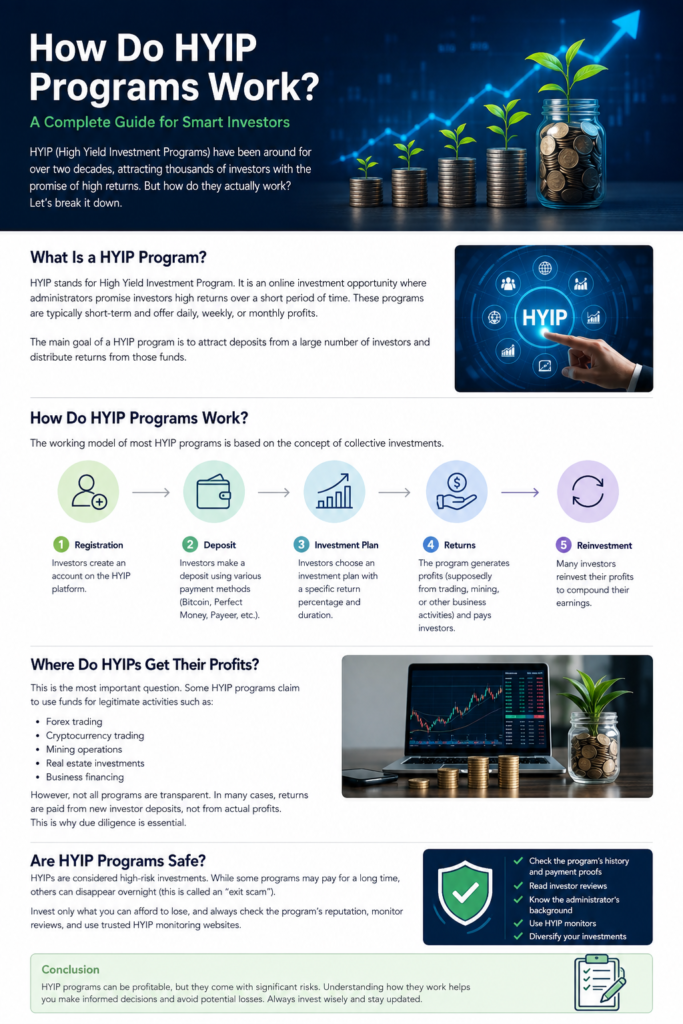
HYIP stands for High Yield Investment Program.
The term usually describes an online investment platform that offers investors a potentially high return in exchange for depositing funds for a specified period. Depending on the program, investors may be offered daily, weekly, monthly, or fixed-term returns.
A typical HYIP website may include:
- Different investment plans
- Minimum and maximum deposit amounts
- Fixed investment periods
- Advertised profit percentages
- Deposit and withdrawal options
- Referral or affiliate programs
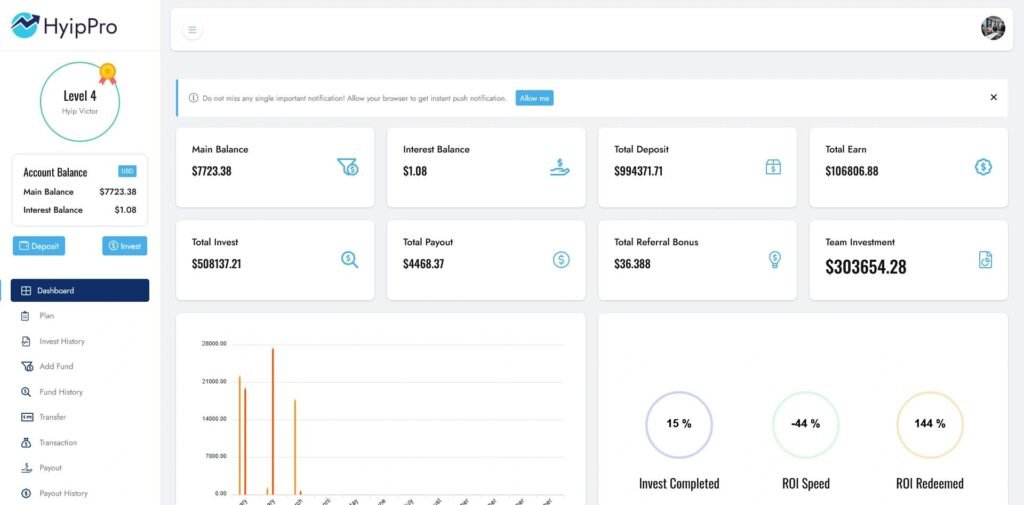
- Investor dashboards
- Payment processing through cryptocurrency or other methods
The important point is that HYIP is not a standardized financial product. Different websites can operate in completely different ways.
Investor.gov describes HYIPs as typically unregistered investments operated by unlicensed individuals and warns that they are often fraudulent.
How Do HYIP Programs Work?
Although individual programs can be very different, the basic process often looks like this:
1. Registration
An investor creates an account on the HYIP website.
The platform may request basic information such as an email address, username, and password. Some programs may also require identity verification.
2. Making a Deposit
The investor selects an investment plan and deposits funds.
Depending on the platform, deposits may be made using:
- Bitcoin
- USDT or other cryptocurrencies
- Bank transfers
- Payment processors
- Other digital payment methods
The minimum deposit can range from a relatively small amount to thousands of dollars.
3. Selecting an Investment Plan
The investor chooses a plan based on the advertised return and duration.
For example, a hypothetical program might advertise:
Investment: $100
Term: 30 days
Advertised return: 20%
The investor may then expect to receive the original investment plus the advertised profit at the end of the term.
However, an advertised return is not the same thing as a guaranteed return.
4. The Program Claims to Generate Profits
HYIP operators may claim that investor funds are used for activities such as:
- Cryptocurrency trading
- Forex trading
- Algorithmic trading
- Mining
- Real estate
- Business financing
- Arbitrage
- Other investment strategies
The actual business model may be difficult for an outside investor to verify.
This is one of the most important questions to ask when evaluating any HYIP:
Where does the money to pay investors actually come from?
5. Returns and Withdrawals
If the platform generates sufficient funds, investors may be able to withdraw their advertised profits or principal.
Some programs allow withdrawals at any time, while others lock funds for a fixed investment period.
Some also offer compound investment options, allowing investors to reinvest previous profits.
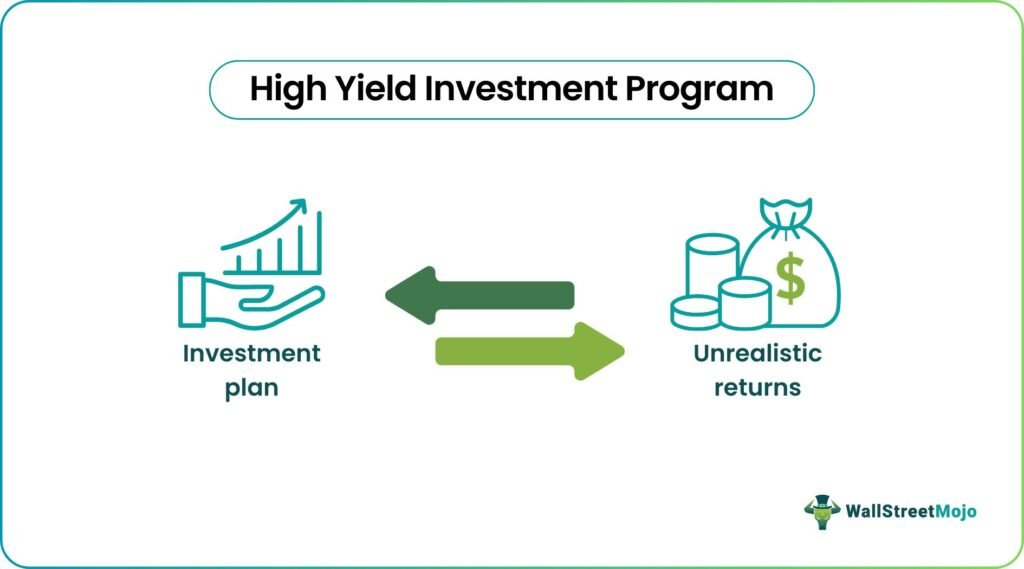
Where Do HYIPs Get Their Profits?
This is perhaps the most important part of understanding a HYIP.
A legitimate investment business should have an identifiable economic activity capable of generating revenue. For example, a trading company might generate profits through trading strategies, while a property business might generate revenue from property operations.
However, some HYIP websites provide only vague descriptions of their activities.
There is another possibility that investors need to understand.
The Ponzi Model
In a Ponzi scheme, money from new investors is used to pay earlier investors rather than being generated through legitimate investment profits. The scheme depends on a continuous flow of new money. When new investors stop arriving or many existing investors request withdrawals, the structure can collapse.
This is why a HYIP showing successful withdrawals in its early stages does not automatically prove that the underlying business is legitimate.
Early investors may receive payments while the platform is still attracting new deposits.
Why Do HYIPs Offer Such High Returns?
High advertised returns are one of the main reasons HYIPs attract attention.
Traditional investments generally involve a relationship between risk and potential return. The higher the expected return, the greater the potential risk normally becomes.
Therefore, claims such as:
- “Guaranteed daily income”
- “Zero risk”
- “Guaranteed profits”
- “Double your money quickly”
- “No losses ever”
should immediately attract scrutiny.
Investor.gov specifically identifies promises of extraordinary returns with little or no risk as a hallmark of HYIP scams.
Why Do Some HYIPs Use Referral Programs?
Referral systems are common in online HYIP marketing.
An existing investor may receive a commission or bonus for referring another person to the platform.
For example:
Investor A → refers Investor B → Investor A receives a referral commission
This can help a website grow rapidly because investors themselves become part of the marketing network.
Referral programs are not automatically proof of fraud. However, if a platform depends heavily on recruiting new participants rather than generating revenue from a genuine business activity, this can be an important warning sign.
Are HYIP Programs Safe?
There is no simple yes-or-no answer for every individual program.
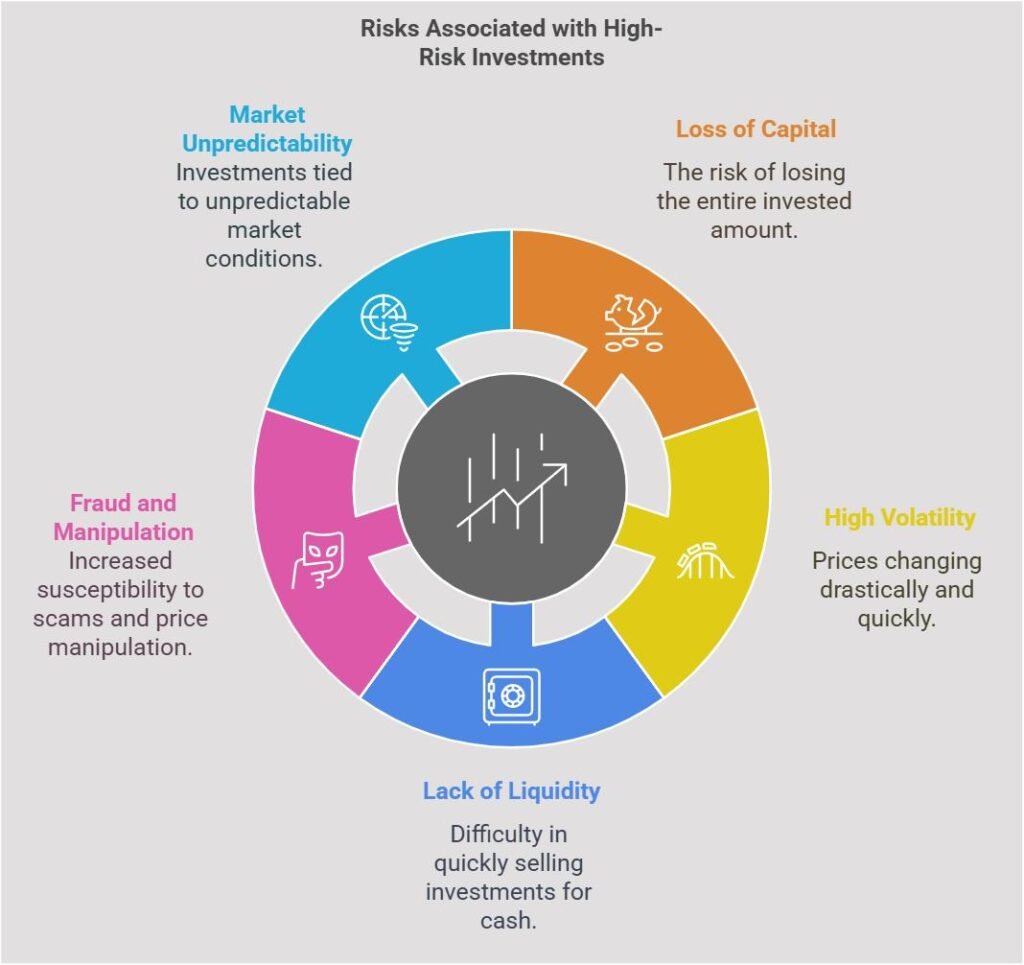
However, HYIPs should generally be treated as high-risk opportunities, and investors should assume that losing the deposited money is possible.
The SEC has continued to take action against alleged fraudulent high-yield investment schemes. For example, in April 2026, the SEC announced charges involving a purported HYIP that allegedly raised more than $6 million from investors.
A professional-looking website does not eliminate investment risk.
A platform can have:
- A modern website
- Professional graphics
- A detailed investment dashboard
- Customer support
- Social media accounts
- Positive testimonials
and still fail to provide sufficient evidence that its business model is legitimate.
Common HYIP Red Flags
Before considering any high-yield investment program, investors should look carefully for warning signs.
Extremely High Guaranteed Returns
The combination of very high returns and supposedly zero risk is one of the strongest warning signs.
Lack of Verifiable Information
Be cautious when you cannot independently verify:
- Who operates the company
- Where the company is registered
- Who manages the investments
- Where investor funds are held
- What business generates the revenue
Pressure to Deposit Quickly
Messages such as “limited opportunity,” “last chance,” or “deposit today” can create unnecessary pressure.
Investment decisions should not be made simply because a website claims that an opportunity will disappear soon.
Anonymous or Unclear Ownership
If the people behind an investment platform cannot be identified or their claims cannot be independently verified, investors should exercise extreme caution.
Unusually Easy Profits
A business that appears to generate extremely consistent returns regardless of market conditions deserves additional investigation.
Withdrawal Problems
One of the most serious warning signs is when a platform suddenly introduces unexplained fees, additional deposits, taxes, verification payments, or other requirements before allowing a withdrawal.
How to Research a HYIP
If someone is considering a HYIP, research should come before depositing money.
Start by checking the company and its operators.
Look for:
- Company registration information
- Regulatory status where applicable
- Names of the management team
- Physical business information
- Independent reviews
- Domain history
- Terms and conditions
- Withdrawal rules
- Clearly explained investment activities
- Evidence supporting the company’s financial claims
Do not rely exclusively on testimonials published on the HYIP’s own website.
Investor.gov also recommends researching investments carefully and being particularly cautious with unsolicited online investment offers.
HYIP Monitoring Websites
The popularity of HYIPs has also created a separate ecosystem of websites that monitor investment programs.
HYIP monitors may publish information such as:
- Program launch dates
- Current status
- Investment plans
- Payment proofs
- User comments
- Domain information
- Program ratings
- Scam warnings
These websites can be useful as one source of research, but they should not be treated as a guarantee that a particular HYIP is legitimate.
A monitor listing or positive rating does not eliminate the underlying investment risk.
HYIPs and Cryptocurrency
Cryptocurrency is frequently associated with modern HYIP websites because digital assets can make international payments relatively fast.
Some platforms accept cryptocurrencies such as Bitcoin or stablecoins.
This can provide convenience for international investors, but it can also create additional risks.
Depending on the jurisdiction and payment method, cryptocurrency transactions may be difficult or impossible to reverse once sent.
Therefore, investors should be especially careful when a platform requests cryptocurrency deposits and provides limited information about the legal entity behind the operation.
What Happens When a HYIP Collapses?
There are several possible scenarios.
A legitimate but unsuccessful investment business could lose money because its underlying strategy fails.
A fraudulent platform may simply stop processing withdrawals.
In a Ponzi-style operation, the collapse can occur when the flow of new deposits is no longer sufficient to meet withdrawal requests.
The website may then:
- Stop withdrawals
- Change its investment plans
- Increase withdrawal requirements
- Announce technical problems
- Introduce new fees
- Disappear completely
Once the operators disappear and funds have been transferred through difficult-to-trace payment channels, recovering money can be extremely difficult.
How Much Should You Invest in a HYIP?
There is no universal amount that is safe.
The most important principle is to understand that high potential returns can come with a high probability of loss.
Never invest money that you cannot afford to lose.
Investors should also avoid putting all available capital into one speculative program. Diversification can reduce concentration risk, although it cannot make a high-risk investment safe.
Final Thoughts
So, how do HYIP programs work?
In simple terms, a HYIP collects investment deposits and promises investors unusually high returns over a specified period. The platform may claim to generate these returns through trading, cryptocurrency, business activities, lending, real estate, or other strategies.
The central issue is whether the advertised returns are supported by a genuine and verifiable business model.
Some investment programs may operate legitimate businesses, while others may be fraudulent. A particularly dangerous model is a Ponzi scheme, where money from new investors is used to pay earlier participants.
For that reason, HYIPs should never be evaluated solely by their advertised percentage, attractive website, or payment screenshots.
Research the company. Understand the business model. Verify the claims. Check the risks. And never assume that a promised return is guaranteed.
This article is for educational and informational purposes only and does not constitute investment, financial, or legal advice.